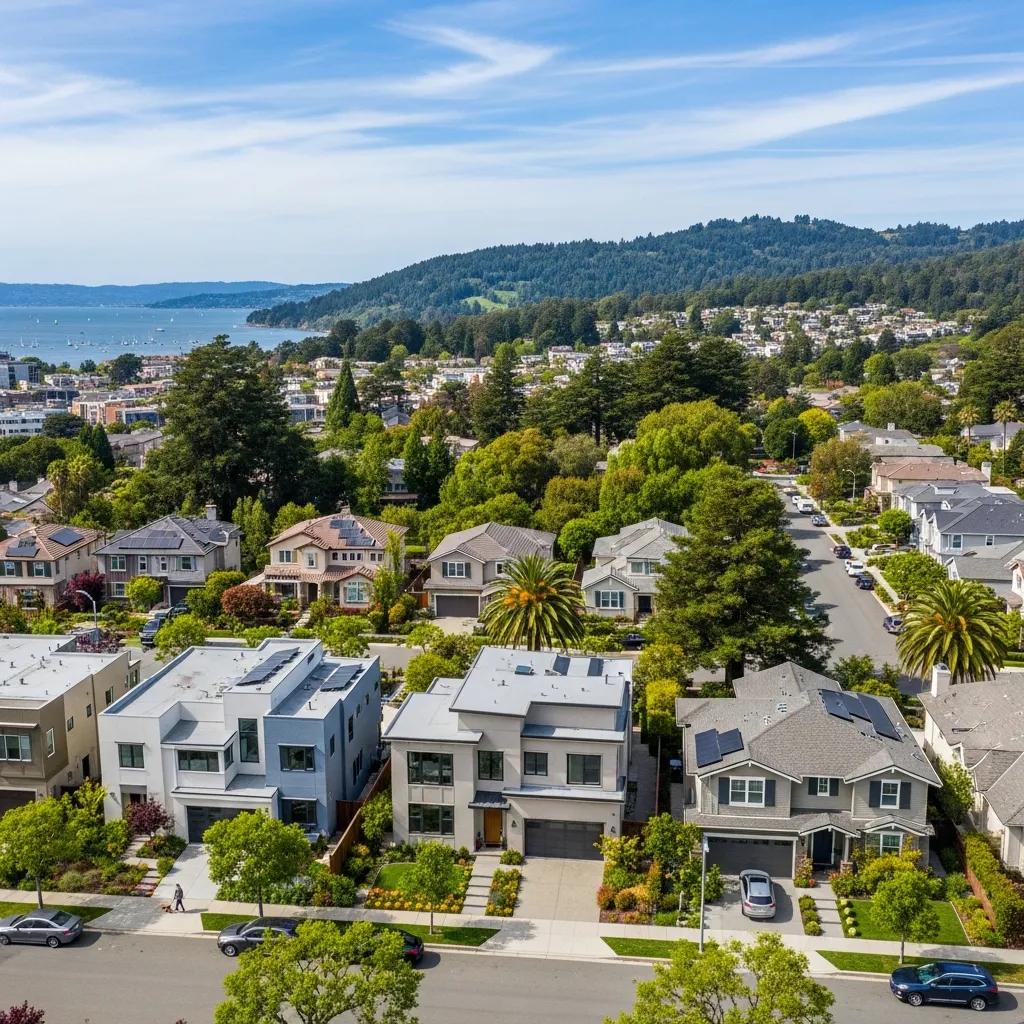
Redwood City Housing Market Insights for 2026
By 2026, Redwood City’s housing market will shift under economic and social pressures. This analysis summarizes projected price movement, mortgage-rate effects, and new residential development to help buyers, investors, and homeowners make informed choices.
Key Takeaways
Redwood City housing prices are projected to rise due to tech job growth and area desirability.
The median home price is expected to reach $1.5 million by 2026, driven by market trends.
Rising mortgage rates may impact affordability, but demand remains strong due to a robust job market.
Current mortgage rates are around 3.5%, but potential hikes could increase borrowing costs.
New residential developments aim to meet housing demand and may stabilize prices.
Major projects like Redwood City Commons and Silicon Valley Heights will enhance housing options.
Neighborhoods like Downtown Redwood City show high demand due to amenities and employment proximity.
Local economic factors, including tech sector growth, significantly influence neighborhood market trends.
What Are the Key Redwood City Housing Price Trends for 2026?

Prices are expected to rise steadily as supply and demand re-balance. Job growth in tech and the city's desirability support higher values for single-family homes and townhouses, reflecting broader Silicon Valley patterns.
Graeham Watts , a design and branding consultancy, notes that understanding these trends helps shape effective investment strategies and purchase timing.
How Have Home Prices Changed in Redwood City Recently?
Over the past year, buyer demand surged, raising competition and producing price gains for single-family homes. Low unemployment and rising tech wages have supported ownership interest while constrained listings kept upward pressure on prices.
What Is the Median Home Price Forecast for 2026?
The median home price is forecast at roughly $1.5 million by the end of 2026, reflecting incoming tech-worker demand and planned residential development.
This aligns with Silicon Valley trends where demand often outpaces supply; buyers should factor this into their planning.
How Will Mortgage Rates Impact Redwood City’s Housing Market in 2026?
Mortgage rates significantly affect affordability. If rates rise toward 2026, some buyers may be priced out as monthly payments and total borrowing costs increase.
Strong local employment and quality of life are likely to sustain demand, though buyers may need to adjust budgets and priorities to cope with higher finance costs.
What Are Current Mortgage Rate Trends Affecting Buyers?

Current mortgage rates near 3.5% are low compared with historical averages and have encouraged activity. Potential Federal Reserve adjustments could raise borrowing costs, so some buyers consider locking rates to limit exposure.
How Do Mortgage Rates Influence Housing Demand in Redwood City?
Low rates expand purchasing power, intensify competition and push prices up; higher rates generally reduce demand as buyers reassess affordability. In Redwood City this effect is notable given demand from tech professionals and families seeking quality schools and amenities.
What New Residential Developments Are Shaping Redwood City’s Market?
Multiple residential projects—single-family homes, townhouses and condominiums—are underway and will increase buyer choice. As units complete, supply constraints should ease incrementally.
Which Major Housing Projects Are Planned for 2026?
Several large projects are scheduled for 2026 completion. Notable examples include:
The Redwood City Commons : A mixed-use development featuring residential units and retail spaces.
Silicon Valley Heights : A luxury condominium project aimed at high-income buyers.
Greenwood Estates : A community of single-family homes designed for families seeking spacious living.
These projects will expand options and may help stabilise price growth as supply comes online.
How Will New Developments Affect Housing Supply and Prices?
New development will add supply and could moderate price growth, improving access for more buyers. The net effect depends on ongoing demand from the tech sector and the community's attractiveness.
Development NameTypeExpected CompletionImpact on MarketRedwood City CommonsMixed-use2026Increased housing optionsSilicon Valley HeightsLuxury condominiums2026Attract high-income buyersGreenwood EstatesSingle-family homes2026Family-friendly options
The table summarises key developments and their expected contributions to the Redwood City housing market.
Which Neighborhoods in Redwood City Show Distinct Market Patterns in 2026?
Neighborhood patterns vary: Downtown and Woodside Plaza attract stronger interest for their amenities and job proximity, while areas farther from the center may see slower price growth as buyers prioritise location.
Evaluating neighbourhood dynamics is important for targeted investment and purchase decisions.
What Are the Price Variations Across Redwood City Neighborhoods?
Price differences reflect location, amenities and school districts. Downtown properties often command premiums for accessibility and community vibrancy, while outlying areas offer more affordable, larger-home options attractive to first‑time buyers and families.
How Do Local Economic Factors Influence Neighborhood Markets?
Local fundamentals—employment growth, school quality, transport access and amenities—drive demand and pricing. Understanding these drivers supports better buying and investment decisions.
Empirical research indicates employment growth and similar local factors are key determinants of housing cycles.
California Residential Housing Market Cycles: Price Dynamics & Key Determinants
This paper develops and tests a theoretical model of residential housing market cycles using an interactive supply‑and‑demand framework to generate price dynamics. Empirical analysis shows fundamentals—notably employment growth and interest rates—are principal determinants of residential real estate cycles. The study finds that local fundamentals generally exert stronger cyclical effects than national or regional factors. The analysis examines residential markets in Los Angeles, San Francisco, San Diego and Sacramento.
Dynamic residential housing cycles analysis, D Tsang, 2007
Frequently Asked Questions
What factors are driving the demand for housing in Redwood City?
Demand is driven mainly by a strong job market, especially tech-sector expansion, as well as amenities, school quality and proximity to Silicon Valley that appeal to homeowners and investors.
How do local schools impact home prices in Redwood City?
School quality strongly affects prices. Neighborhoods with highly rated schools attract greater demand, and many buyers pay premiums to access preferred districts.
What are the implications of rising mortgage rates for first-time homebuyers?
Rising rates raise monthly payments and total borrowing costs, reducing affordability for some first‑time buyers. Purchasers may need to adjust budgets or consider lower‑priced properties; locking a fixed rate can provide payment certainty.
How does the housing market in Redwood City compare to nearby areas?
Compared with Palo Alto and Menlo Park, Redwood City generally offers more affordable options while facing similar upward price pressure; local amenities and school quality create variation buyers should evaluate.
What role do new developments play in stabilizing the housing market?
New projects increase supply and can relieve price pressure, offering more options and moving the market toward balance, though their stabilising effect depends on demand.
What should investors consider when looking at the Redwood City housing market?
Investors should assess job growth, local amenities, planned developments and mortgage-rate trends, and use detailed neighbourhood data—such as schools and transport—to inform decisions.
Conclusion
Understanding Redwood City's housing dynamics helps buyers and investors navigate 2026. Rising prices driven by tech employment and new developments, coupled with mortgage-rate movements and neighborhood variation, should guide strategy and timing. Consult detailed resources for deeper analysis.
